
Maldives eSIM
8 plans available
Best eSIM for Maldives
Compare 8 prepaid eSIM plans for Maldives starting from €7.45. Instant QR code delivery by email, activation in under 2 minutes, no roaming fees and no contracts.
Mobile Networks & Coverage in the Maldives
e1sim Maldives plans run on Dhivehi (Dhiraagu) — the Maldives' primary mobile network, with 4G LTE service across Malé (the capital), the main resort atolls and all inhabited islands. Coverage reaches North Malé Atoll, South Malé Atoll, Ari Atoll, Baa Atoll and most of the popular resort-island clusters, so you can stay connected whether you're on your villa deck or in a speedboat transfer between islands.
The Maldives is one of the world's most geographically dispersed countries — 1,200 coral islands scattered across 90,000 square kilometres of the Indian Ocean, with no point of land more than 1.8 metres above sea level. Signal is excellent at established resorts and inhabited islands, but some remote southern atolls and tiny uninhabited sandbanks may have limited or no coverage. On most luxury resort islands, the resort's own Wi-Fi complements your eSIM; for transfers, snorkelling excursions and inter-atoll speedboat rides, 4G keeps you connected.
Overwater Villas, the Sea of Stars & UNESCO Bioluminescence
The Maldives defines a certain kind of dream: a thatched villa suspended over a turquoise lagoon so clear you can watch reef fish swim beneath the glass floor, the horizon an unbroken line between ocean and sky. The overwater bungalow — pioneered in the Maldives and now synonymous with Indian Ocean luxury — offers a level of seclusion and natural immersion that few places on earth can match. Waking to the sound of the sea beneath you, stepping directly from your bedroom into warm 28°C water, watching manta rays glide past as you eat breakfast on your private deck: this is what travellers come here for.
On Vaadhoo Island in the Raa Atoll, a bioluminescent phenomenon transforms the shoreline after dark into something from another world. Billions of microscopic dinoflagellate plankton emit a vivid electric-blue light when disturbed by waves, footsteps or a hand trailed through the water — each breaking wave pulses with neon-blue fire, and footprints in the wet sand glow in the darkness behind you. The effect, known locally as the Sea of Stars (Maldivian: “kurin”), is best seen on moonless nights from July through February, when plankton concentrations are highest and the sky is dark enough to amplify the contrast. No equipment is needed — walk to the waterline after midnight, let your eyes adjust, and the ocean lights itself.
Hanifaru Bay, in the Baa Atoll UNESCO Biosphere Reserve — one of only a handful of UNESCO Biosphere Reserves in the world to be entirely oceanic — is one of the planet's great marine spectacles. From July to October, ocean currents funnel vast quantities of plankton and krill into the bay, attracting feeding aggregations of hundreds of manta rays and whale sharks simultaneously. Mantas barrel-roll through the water column in tight spirals, feeding with open mouths; whale sharks drift at the surface like slow grey submarines, filtering tonnes of plankton per hour. Access to Hanifaru Bay is tightly managed by the Maldives Marine Research Institute to protect the marine life — only licensed boats with certified dive guides are permitted, and numbers are limited. Book well in advance for July–October visits.
The Ithaa Undersea Restaurant & Banana Reef Diving
At Conrad Maldives Rangali Island in South Ari Atoll, five metres beneath the surface of the Indian Ocean, the world's first all-glass undersea restaurant offers a dining experience with no parallel on earth. The Ithaa Undersea Restaurant — its name means "mother of pearl" in Dhivehi — seats twelve guests at a curved acrylic tunnel table surrounded on all sides by the living reef. Grey reef sharks glide overhead; eagle rays bank past the panoramic dome; hawksbill turtles pass within arm's reach of the glass; shoals of yellow and blue damselfish dart between coral formations on the ocean floor. A five-course prix fixe dinner takes around two hours; the experience is impossible to rush. Tables book out months in advance and must be reserved directly with the Conrad resort.
Banana Reef in North Malé Atoll is the Maldives' most famous and historically significant dive site — the first reef in the country to be given formal protection, and still one of its most diverse. The reef's banana-shaped curve creates a series of overhangs, crevices and coral caves that shelter an extraordinary density of marine life: giant moray eels coiled beneath ledges, schools of oriental sweetlips hovering in the current, Napoleon wrasse and pufferfish drifting in the blue, and massive groupers occupying every cave entrance like surly landowners. At depths between 5 and 30 metres, it suits both beginner and advanced divers. The surrounding channels reliably attract grey reef sharks, and overnight nurse sharks rest in the sandy patches between coral heads. Other unmissable dive sites nearby include Maaya Thila (the 'shark point' of Ari Atoll), Lankan Faru (a manta cleaning station), and the wreck of the Maldive Victory cargo ship near Malé — at 32 metres, a haunt of batfish, scorpionfish and moray eels.
Why Choose e1sim for Maldives?

Instant Activation
Scan a QR code and go online in minutes — no physical SIM needed

Best Prices
Transparent pricing with no hidden fees or roaming surprises

Premium Network
4G/LTE on top local carriers — fast and reliable everywhere you travel
Explore Maldives with e1sim
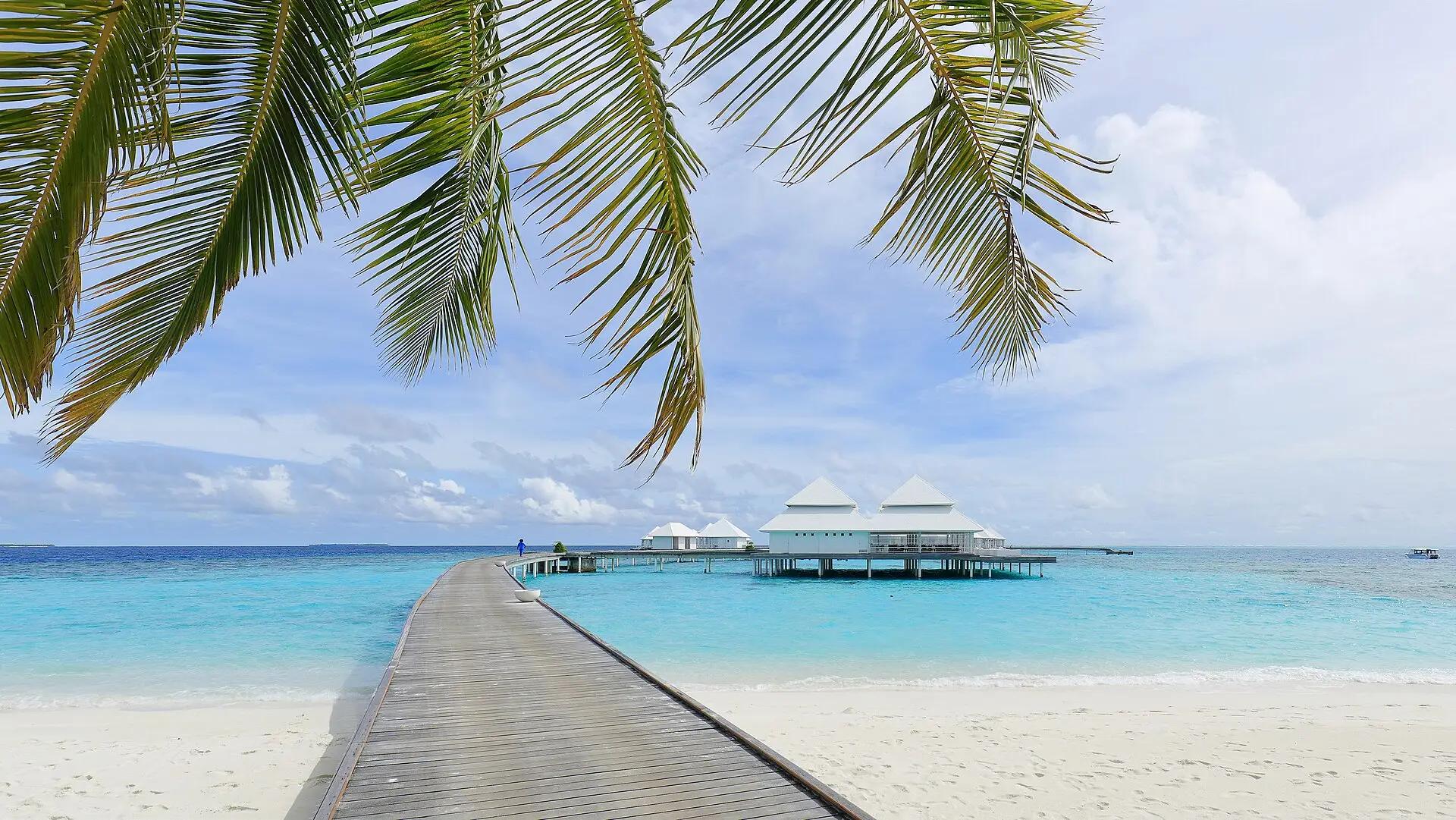

Malé Atoll
Turquoise lagoons, overwater bungalows and dazzling coral reefs in paradise
Baa Atoll
UNESCO biosphere atoll where manta rays and whale sharks gather in masse

Vaadhoo Island
Famous for its magical bioluminescent blue-glowing sea of stars at night