
Bolivia eSIM
8 plans available
Best eSIM for Bolivia
Compare 8 prepaid eSIM plans for Bolivia starting from €6.66. Instant QR code delivery by email, activation in under 2 minutes, no roaming fees and no contracts.
Mobile Networks & Coverage in Bolivia
e1sim Bolivia plans run on Tigo Bolivia — one of the country’s leading mobile operators — with 4G LTE coverage in La Paz, El Alto, Santa Cruz de la Sierra, Cochabamba, Oruro, Sucre and Potosi. The main highway corridors connecting these cities are served at 4G; rural roads and the high-altitude altiplano plateau have 3G or edge coverage on secondary routes. Santa Cruz, the country’s largest city and economic hub in the eastern lowlands, has the broadest 4G footprint; La Paz and adjacent El Alto at 3,600–4,000 metres altitude are both well covered by the city networks.
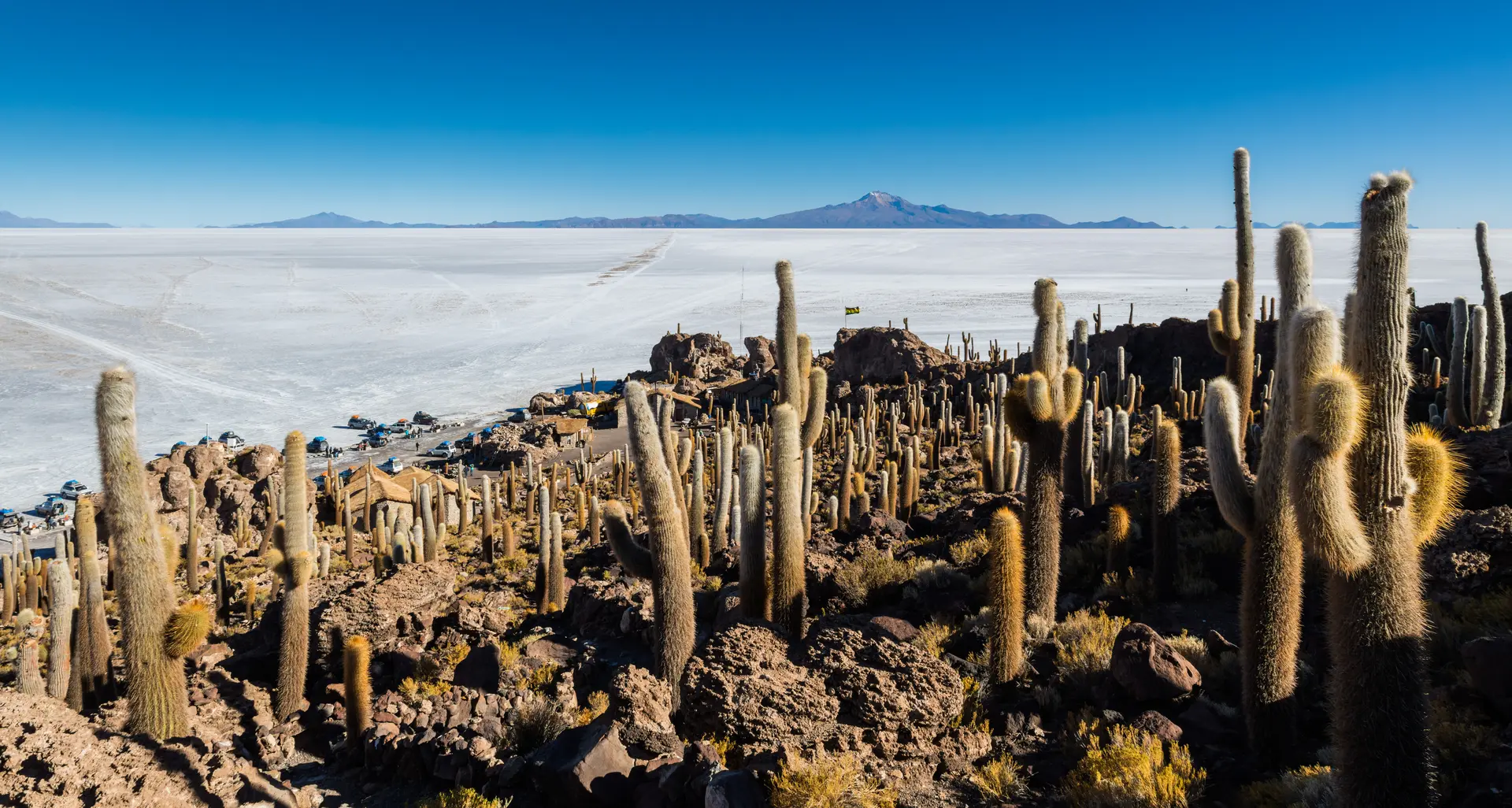
The Salar de Uyuni — the world’s largest salt flat — is in a remote location in the southwestern altiplano: 4G is available in the town of Uyuni itself and along the main tourist approach road, but the vast expanse of the salt flat and the surrounding desert reservations have limited signal. Download offline maps and navigation before any self-drive or agency tour into the salar. Lake Titicaca at Copacabana has reliable coverage in town and on the road from La Paz; the Isla del Sol has limited signal in the main settlements. The Yungas jungle road toward Coroico has spotty coverage; the Death Road descent is a canyon environment with poor signal throughout.
La Paz, Salar de Uyuni & Lake Titicaca
Bolivia is one of South America’s most geographically extreme countries: a landlocked nation that nevertheless contains an extraordinary range of environments — the world’s highest navigable lake, the world’s largest salt flat, dense Amazon rainforest and the colonial silver city that was once the largest city in the Americas outside China. La Paz, the seat of government at 3,600 metres above sea level, is the world’s highest capital city by most measures. The city descends into a deep canyon of the Choqueyapu River, ringed by El Alto on the plateau above and overlooked by the snow-capped peak of Illimani (6,438 m) to the south-east. The Witches’ Market (Mercado de las Brujas) in the Sagrário neighbourhood sells ritual items — dried llama foetuses, coca leaves, herbal remedies — used in Andean spiritual practices; the narrow streets around it are lined with cholita market women in traditional dress. The Mi Telerérico cable car network — 10 urban lines connecting La Paz to El Alto — is simultaneously a mass transit system and the world’s largest urban cable car, crossing canyons and barrios at heights that make the city’s layered geography spectacularly clear. El Alto itself, a city of over one million people on the plateau, has the extraordinary Feria 16 de Julio market — one of the largest open-air markets in South America — filling dozens of city blocks every Thursday and Sunday.
Sucre, the constitutional capital, is a city of white-washed colonial buildings, leafy plazas and a relatively gentle altitude of 2,800 metres. The Casa de la Libertad — the room where Bolivian independence was signed in 1825 — is on the main square; the Catedral Metropolitana and the Recoleta Monastery with its panoramic terrace are the other architectural anchors. Potosi, at 4,090 metres, was once the largest city in the Western Hemisphere — it grew explosively in the 16th century on silver mined from Cerro Rico, the “rich mountain” that dominates the city skyline. An estimated eight million people died working the mines over three centuries; the mine shafts are still worked by cooperative miners today, and tours into the working mines — entering the same tunnels that date from colonial extraction — are among Bolivia’s most confronting and memorable experiences. The historic city centre is a UNESCO World Heritage Site; the Mint (Casa de la Moneda), where silver from Cerro Rico was stamped into coins that circulated globally, is the finest colonial industrial building in South America.
The Salar de Uyuni covers 10,582 square kilometres of the altiplano at 3,656 metres altitude — a blinding white expanse of crystallised salt crust over a brine lake, formed from prehistoric lakes that evaporated. In the dry season (May to November) the surface is hard and perfectly flat; the famous mirror illusion occurs in the wet season (December to April) when a thin film of water creates a perfect 360-degree sky reflection. The Salar contains a significant fraction of the world’s known lithium reserves, visible as pink brine pools at extraction sites in the south-west. The surrounding reservations — Eduardo Avaroa Andean Fauna National Reserve — contain flamingo-inhabited red and green lagoons, geysers, volcanic peaks and desert landscapes of surreal colour. Lake Titicaca, shared between Bolivia and Peru at 3,812 metres, is the highest large lake in the world navigable by larger vessels. The Bolivian shore is accessed from Copacabana, a small pilgrimage town famous for the Basilica of Our Lady of Copacabana and the tradition of blessing vehicles (Blessing of the Cars). From Copacabana, boats cross to Isla del Sol — an island of Inca ruins, Andean villages and panoramic views over the lake that are among the most atmospheric in the Andes.
eSIM vs Roaming in Bolivia
Bolivia is outside the EU roaming zone and not covered by standard North American, British or Australian carrier plans at domestic rates. International roaming day-pass add-ons from European and US carriers typically cost US$10–15 per day. An e1sim prepaid plan on Tigo Bolivia provides a fixed data allowance on the local 4G network at a transparent prepaid price, with no surprise charges when you return home.
Physical SIM cards are available in La Paz, Santa Cruz and other cities from Tigo, Entel and Viva outlets, but purchasing in person requires waiting in line after a potentially long arrival at El Alto International Airport (at 4,061 metres, the world’s highest commercial airport). An eSIM purchased before departure means data activates on landing; WhatsApp and Messenger are the standard communication platforms across Bolivia’s tourism and business sectors, running entirely on data.
Why Choose e1sim for Bolivia?

Instant Activation
Scan a QR code and go online in minutes — no physical SIM needed

Best Prices
Transparent pricing with no hidden fees or roaming surprises

Premium Network
4G/LTE on top local carriers — fast and reliable everywhere you travel
Explore Bolivia with e1sim

Bolivia Capital
Explore the vibrant city centre, local markets and historic landmarks of Bolivia

Local Cuisine
Savour authentic dishes and street food that define the culinary identity of Bolivia

Cultural Heritage
Discover the rich history and cultural heritage through museums, temples and ancient sites