
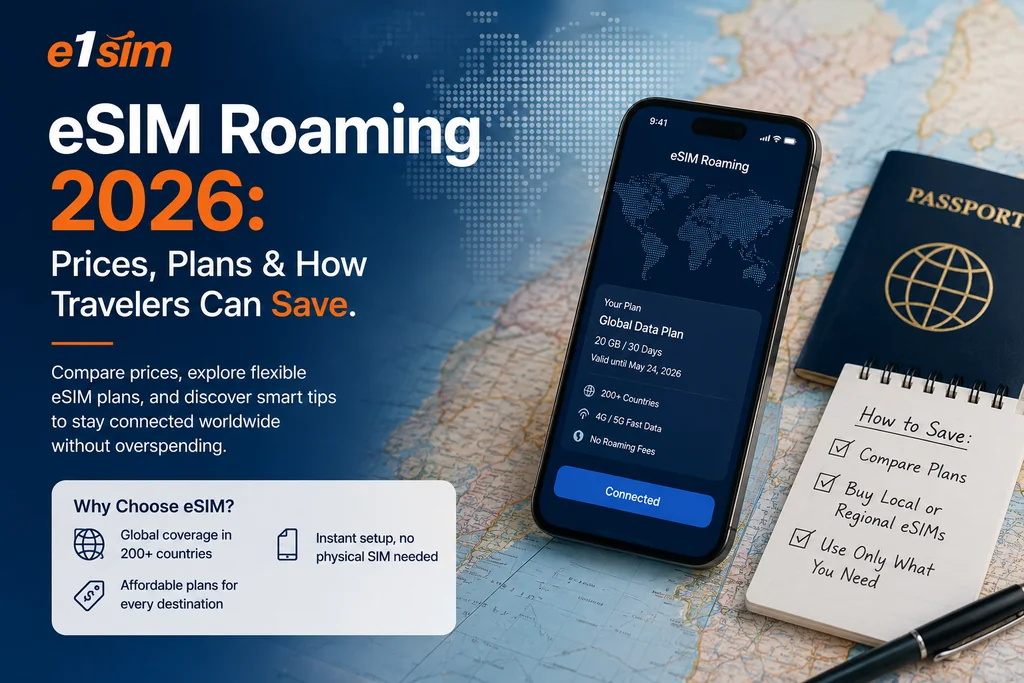
Roaming Costs in 2026: How Much Are Tourists Really Overpaying?
International travel has never been more accessible, yet one expense continues to frustrate globetrotters: roaming charges. As we navigate through 2026, mobile roaming fees remain a significant hidden cost that can easily transform a budget trip into an unexpectedly expensive adventure. Whether you're exploring the beaches of Southeast Asia, wandering through European capitals, or discovering hidden gems across Africa, staying connected shouldn't drain your travel budget. This comprehensive guide examines current roaming pricing, reveals how much tourists typically overpay, and introduces smarter alternatives that can reduce your connectivity costs by up to 90%. Understanding roaming economics has become essential for savvy travelers who want to maximize their experiences without compromising their financial planning.
Current Roaming Rates: What Travelers Face in 2026
The global roaming market has undergone significant transformation, yet prices remain surprisingly high in many regions. According to recent telecommunications industry reports, international roaming charges vary dramatically depending on your home country and destination.
Typical roaming costs in 2026 include:
- Data roaming: $8-15 per GB in premium destinations
- Voice calls: $1.50-3.00 per minute internationally
- SMS messages: $0.50-1.50 per message
- Monthly roaming packages: $40-120 for limited data allowances
Major carriers like Verizon, AT&T, Deutsche Telekom, and Vodafone still charge premium rates despite increased competition. European Union regulations have helped cap some costs within EU borders, but travelers heading outside Europe face significantly higher charges. North American carriers, in particular, maintain some of the world's most expensive roaming rates.
How Much Are Tourists Actually Overpaying?
Research indicates that international travelers overpay for roaming by 300-500% compared to local pricing. A traveler using traditional roaming in Thailand might pay $12 per GB, while a local Thai resident pays approximately $2-3 for the same data.
Regional overpayment analysis reveals:
- Asia-Pacific destinations: 400-500% markup
- European cities: 200-300% markup (outside EU)
- Middle East and Africa: 350-450% markup
- Latin America: 280-380% markup
A two-week vacation requiring 5-6 GB of data could cost $60-90 through traditional roaming, whereas the same connectivity would cost $10-15 through local providers or modern alternatives. For business travelers making monthly trips, annual roaming expenses can reach $2,000-5,000 unnecessarily.
Regional Pricing Insights: Where Opportunities Exist
Southeast Asia: Thailand, Vietnam, and Philippines
Thailand and Vietnam represent hotspots for digital nomads and leisure travelers, yet roaming costs remain prohibitively high. Thailand eSIM solutions have revolutionized connectivity in the region, offering 3-4 week data packages starting at $15-25. Vietnam presents similar opportunities with competitive local rates that undercut traditional roaming by 80-90%.
For travelers heading to these destinations, platforms like e1sim.com provide straightforward solutions. You can browse Thailand eSIM options before departure, purchase instantly, and activate upon arrival. This eliminates the stress of finding local SIM cards or managing roaming charges. The platform offers transparent pricing—what you see is exactly what you pay, with no hidden activation fees or surprise overage charges.
Europe: Portugal, Spain, and Poland
European pricing varies significantly outside official EU roaming agreements. Portugal and Spain, popular with tourists, charge €8-12 per GB through major carriers to non-residents. Poland offers particularly competitive rates, with local eSIM providers delivering 10 GB packages for $20-28.
E1sim.com streamlines purchasing Portugal eSIM cards and Spain eSIM options with same-day activation. Tourists can purchase directly from home, avoiding language barriers and unfamiliar local shops. The platform's comparison tools help travelers identify the best value packages specific to their data needs and trip duration.
The eSIM Revolution: A Game-Changer for 2026
Digital SIM cards have emerged as the primary solution to roaming cost inflation. Unlike physical SIM cards requiring replacements or traditional roaming requiring carrier involvement, eSIMs operate through downloaded profiles that activate instantly.
Key advantages of eSIM technology:
- Immediate activation: No physical card required; download and activate in minutes
- Multiple profiles: Switch between providers without changing cards
- Competitive pricing: Local rates without international markups
- Flexibility: Change plans mid-trip if needed
- Environmental benefit: No plastic waste from physical cards
eSIM adoption across Asia, Europe, and North America has created genuine price competition. Providers must compete on value rather than relying on limited local SIM card availability or regional carrier monopolies.
Calculating Your True Roaming Costs
Understanding actual expenses requires comparing several scenarios. Assume a 10-day European trip requiring 4 GB of data and occasional international calls:
Traditional Roaming (Major US Carrier): - Data: 4 GB × $12/GB = $48 - 10 minutes of calls: 10 × $2.50 = $25 - Total: $73
Local SIM Card (if available): - Cost: $15-25 - Data package: $20-30 - Total: $35-55
eSIM Solution: - Regional package: $25-35 - Includes generous data and calling minutes - Total: $25-35
For a two-week trip, savings with eSIM solutions typically range from $50-100 compared to traditional roaming.
Practical Recommendations for Budget-Conscious Travelers
Before Your Trip
- Research destination eSIM providers 3-5 days before departure
- Compare data allowances against your planned usage (streaming, navigation, communication)
- Verify device compatibility—most smartphones post-2018 support eSIM
- Purchase through established platforms like e1sim.com to ensure legitimate providers
During Your Trip
- Monitor data consumption through device settings
- Utilize WiFi for heavy streaming and updates
- Consider purchasing additional packages only if necessary
- Keep backup contact information for provider support
After Your Trip
- Disconnect roaming services immediately upon return
- Document expenses for business travel reimbursement
- Leave feedback on platform reviews to help future travelers
Beyond Just Data: Hidden Roaming Expenses
Roaming costs extend beyond data charges. Many travelers overlook additional fees:
- Call forwarding: $0.50-1.00 per call
- Voicemail retrieval: $0.50-1.50 per message
- MMS messaging: $1.00-3.00 per message
- Roaming package activation fees: $5-10
- Minimum monthly commitment: Some carriers enforce minimums even for light usage
These hidden charges often comprise 20-30% of total roaming bills, catching travelers off-guard during billing cycles.
The 2026 Roaming Landscape and Future Trends
The telecommunications industry continues evolving toward more transparent, competitive pricing models. Several trends indicate improvement:
- eSIM standardization: Growing device compatibility increases adoption
- Regulatory pressure: EU and Asian regulators continue pushing for price caps
- Provider competition: New entrants challenge legacy carrier pricing
- Technology advancement: 5G networks improve value propositions
- Consumer awareness: Travelers increasingly demand alternatives
However, traditional carriers still dominate, and prices remain sticky despite these improvements. International travelers must actively seek alternatives rather than passively accepting roaming charges.
Conclusion: Smart Connectivity for Modern Travel
The reality of 2026 roaming costs remains clear: travelers overpay significantly when using traditional carrier services. However, modern alternatives have democratized affordable international connectivity. eSIM technology, represented by platforms like e1sim.com offering competitive packages across Thailand, Southeast Asia, Europe, and beyond, has eliminated the excuse for paying inflated roaming rates.
Your next international adventure doesn't require choosing between staying connected and maintaining your budget. By understanding roaming economics, comparing regional pricing, and leveraging eSIM solutions, you can reduce connectivity expenses to 10-20% of what traditional roaming would cost. The choice is straightforward: accept unnecessary overpayment or embrace smarter alternatives that respect both your travel experience and your wallet.
The travelers who thrive in 2026 aren't those accepting default carrier roaming—they're those making informed decisions that maximize value at every destination.
Key Takeaways
- Roaming overpayment: Tourists typically pay 300-500% more than local rates for international connectivity
- Regional variations: Asia charges 400-500% markups, while European roaming varies between 200-450% depending on location
- Cost comparison: A 10-day European trip costs $73 with traditional roaming versus $25-35 with eSIM solutions
- eSIM advantages: Instant activation, multiple profiles, competitive pricing, and immediate availability eliminate roaming cost inflation
- Platform benefits: Services like e1sim.com provide transparent pricing for Thailand, Southeast Asia, Europe, and other major destinations
- Hidden expenses: Call forwarding, voicemail, and MMS fees add 20-30% to roaming bills
- 2026 trend: Growing eSIM adoption and regulatory pressure continue improving consumer value propositions
-