
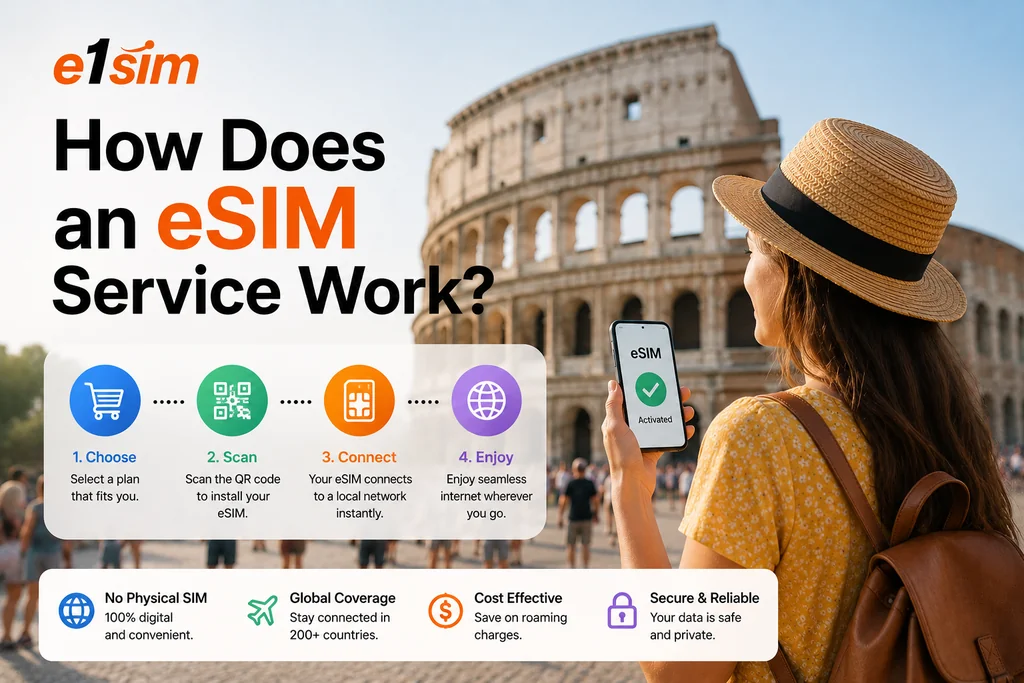
How Does an eSIM Service Work? A Complete Guide
eSIM services are transforming how people get mobile data, especially for travelers. Instead of hunting for a local SIM card or paying expensive roaming fees, you can purchase a data plan online and be connected within minutes. But how exactly does an eSIM service work? Let's break it down.
What Is an eSIM Service?
An eSIM service is a platform or provider that sells digital mobile data plans compatible with eSIM-enabled devices. These services leverage the embedded SIM technology built into modern smartphones to deliver connectivity without any physical hardware.
Think of it as an app store for mobile data — you browse available plans, select what you need, pay digitally, and receive your connection instantly.
Step-by-Step: How an eSIM Service Works
Step 1: Check Device Compatibility
Before purchasing any eSIM plan, confirm that your device supports eSIM. Most iPhone models from XS onward, many Samsung Galaxy flagships, and Google Pixel 3+ support eSIM. Also ensure your device is carrier unlocked — locked phones may not be able to use third-party eSIM profiles.
Step 2: Browse and Select a Plan
eSIM providers typically offer plans organized by destination — country-specific, regional, or global plans. Plans vary in:
- Data volume (e.g., 1 GB, 5 GB, 10 GB, unlimited)
- Validity period (e.g., 7 days, 30 days, 90 days)
- Network type (4G LTE, 5G where available)
- Whether calls and SMS are included
Step 3: Purchase the Plan
Plans are purchased online — either through a web browser or a mobile app. Payment is processed digitally, and you receive your activation credentials (usually a QR code) immediately after purchase.
Step 4: Install the eSIM Profile
Installation is quick and done entirely in your device settings:
- Open Settings on your phone.
- Navigate to Cellular / Mobile Data or Connections → SIM Manager.
- Select Add eSIM or Add Plan.
- Scan the QR code provided by your eSIM provider.
- Confirm the installation when prompted.
Some providers offer app-based or push installation, eliminating the need to scan a QR code entirely.
Step 5: Activate the eSIM
Once installed, the eSIM may activate immediately or upon first use in the destination region. Your device connects to the partner network automatically. You'll typically see a confirmation on screen and a network signal appear.
Step 6: Use Your Data
Once active, your eSIM works just like any mobile data connection. You can browse the web, use apps, stream video, and enable a personal hotspot (if your plan allows). You can monitor data usage directly in your device settings.
Managing Multiple eSIM Profiles
One of the biggest advantages of eSIM services is the ability to manage multiple plans on a single device. For frequent travelers, this means:
- Keeping your home carrier plan active on a physical SIM or eSIM profile
- Loading a destination-specific plan before departure
- Switching between plans with a simple toggle in settings
What Happens When Data Runs Out?
When you exhaust your data allowance, you have several options:
- Top up: Many providers allow you to add more data to an existing plan.
- Buy a new plan: Purchase an additional plan from the same provider.
- Switch profiles: Activate a different eSIM profile if you have one stored.
Is an eSIM Service Secure?
eSIM technology uses the same security standards as physical SIMs, plus the added benefit that profiles are protected by your device's secure enclave. Data transmitted over the eSIM connection is secured by the mobile network's encryption, the same as any LTE or 5G connection.
Who Should Use an eSIM Service?
- Travelers who want affordable local data rates without the hassle of SIM swapping
- Business professionals who frequently cross borders
- Digital nomads who work from multiple countries
- Anyone who wants the flexibility to manage multiple carrier plans digitally
Conclusion
eSIM services have made mobile connectivity dramatically simpler and more flexible. The process — from buying a plan to being connected — can take just a few minutes, entirely from your phone. As eSIM adoption continues to grow worldwide, these services are set to become the standard way people manage mobile data, particularly for international travel.